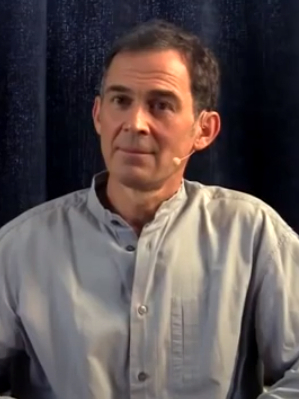
The Essence of Awareness: Unraveling the 'I'
Rupert Spira's assertion, "This 'I' is awareness itself," invites us to reconsider the very nature of our identity. In a world where we often conflate our sense of self with our thoughts, emotions, and experiences, this statement serves as a profound reminder that our true essence transcends these transient states. Understanding this distinction is not merely an intellectual exercise; it has the potential to transform our relationship with ourselves and the world around us.
At its core, this quote challenges the conventional understanding of the 'I' as a fixed entity. Instead, it suggests that our identity is rooted in a deeper awareness that is ever-present and unchanging. This realization can lead to a profound sense of liberation, allowing us to navigate life's complexities with greater ease and clarity. By exploring the implications of this statement, we can begin to uncover the layers of our consciousness and the interconnectedness of all existence.
The image / the metaphor
The phrase "This 'I' is awareness itself" evokes a vivid imagery of a vast, boundless ocean of consciousness, in which individual waves represent our thoughts and experiences. The verbs chosen here—'is'—imply a direct identification between the 'I' and awareness, suggesting that the essence of who we are is not separate from the awareness that perceives our thoughts and feelings. This imagery invites us to feel into the spaciousness of awareness, where the tumult of daily life can be observed without attachment or identification.
In the speaker's tradition
Rupert Spira's teachings are deeply rooted in the non-dual tradition, which emphasizes the interconnectedness of all existence and the illusion of separateness. Concepts such as 'sunyata' (emptiness) and 'fana' (annihilation of the self) resonate with the essence of Spira's assertion, as they point towards the realization that our individual identities are mere reflections of a greater, unified consciousness. In this context, the 'I' becomes a gateway to understanding our place within the vast tapestry of existence.
In his work, Spira often draws upon the teachings of Advaita Vedanta, which posits that the ultimate reality is non-dual and that the perception of separation is an illusion. Texts such as the Upanishads echo this sentiment, inviting seekers to explore the nature of the self and its relationship to the cosmos. By situating Spira's quote within this rich tradition, we can appreciate the depth of insight it offers into the nature of awareness and identity.
Living the teaching
Imagine a moment of frustration during a hectic day, where the weight of responsibilities feels overwhelming. In such instances, the teaching encapsulated in Spira's quote can serve as a powerful anchor. By pausing to recognize that the 'I' experiencing this frustration is not the entirety of our being, we can step back and observe the situation from a place of awareness. This shift allows us to respond with greater clarity and compassion, rather than reacting impulsively from a place of identification with our emotions.
In the realm of relationships, this teaching can also illuminate the dynamics we often take for granted. When conflicts arise, we may find ourselves entangled in the narrative of 'me versus you,' losing sight of the underlying awareness that connects us. By remembering that our true identity is awareness itself, we can approach these situations with a sense of openness and understanding, fostering deeper connections and healing. This practice of recognizing our shared essence can transform the way we engage with others, inviting a more harmonious and compassionate way of being.
A reflection
As we contemplate the profound implications of Spira's assertion, we are invited to explore the nature of our own awareness. What does it mean for you to identify as awareness rather than as a collection of thoughts, feelings, and experiences? In moments of stillness, allow yourself to sit with this question, observing the layers of your identity and the essence that lies beneath. This inquiry can lead to a deeper understanding of yourself and your connection to the world around you.



Join the BrightStar Community
Stay connected with daily inspiration, event announcements, and community wisdom